


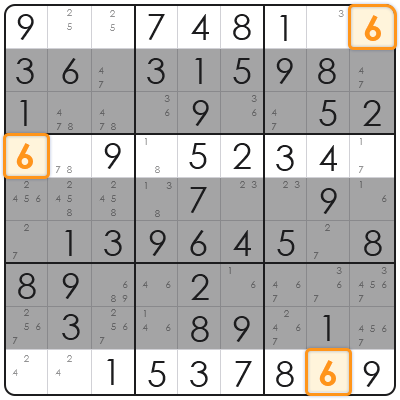

hints for expert sudoku
### Sudoku Tips for Experts
#### Understanding the Basics
When diving into the world of Sudoku, it’s crucial to understand the basic principles. Sudoku is a logic-based combinatorial number-placement puzzle. The objective is to fill a 9×9 grid with digits so that each column, each row, and each of the nine 3×3 subgrids that compose the grid (also called “boxes”, “blocks”, or “regions”) contain all of the digits from 1 to 9. Here are some expert-level tips to enhance your Sudoku solving skills.
#### Advanced Techniques
1. **Hidden Quadruples**: Look for four cells in a 3×3 box that can only contain the same four numbers. If two of these numbers are already placed in other rows or columns, you can eliminate these two numbers from the remaining two cells.
2. **XY-Wing**: Identify a pair of cells that can only contain two numbers. If these numbers are shared with other cells in the same row or column, you can eliminate the third number from those cells.
3. **X-Wing**: Similar to the XY-Wing, but involves two rows instead of two cells. If the two rows can only contain two numbers and these numbers are also present in two other rows, you can eliminate the third number from those rows.
4. **Pointing Pairs and Pointing Triples**: Look for a pair or triple of numbers that can only fit in one row, column, or box. This can help you eliminate other numbers from those rows, columns, or boxes.
5. **Unique Rectangle**: Find two rows or columns where four cells contain the same two numbers, but these numbers can only fit in those two rows or columns. This eliminates those numbers from other cells in the same rows or columns.
#### Time Management
Sudoku solving can be a time-consuming activity. Here are some tips to manage your time effectively:
1. **Start with the Easiest Puzzles**: Begin with puzzles that require less advanced techniques. This will help you warm up and build confidence.
2. **Don’t Get Stuck**: If you encounter a difficult puzzle, take a break and come back later. Fresh eyes can often see solutions that were previously overlooked.
3. **Use a Timer**: Set a timer to keep track of your solving time. This can help you improve your speed and concentration.
#### Frequently Asked Questions (FAQ)
**Q: What is the difference between Sudoku and other number puzzles?**
A: Sudoku is a specific type of number puzzle where the goal is to fill a grid with numbers so that each row, column, and 3×3 subgrid contains all digits from 1 to 9. Other number puzzles may have different rules or objectives.
**Q: How can I improve my Sudoku skills?**
A: Practice regularly and learn advanced techniques such as hidden quadruples, XY-Wings, and X-Wings. Additionally, solving puzzles of varying difficulty can help you improve your problem-solving skills.
**Q: Is it possible to solve a Sudoku puzzle without any guessing?**
A: Yes, it is possible to solve a Sudoku puzzle without guessing. This is achieved by using logical deduction and advanced techniques to fill in the grid.
**Q: Can I use a computer to solve Sudoku puzzles?**
A: Yes, there are many computer programs and online tools designed to solve Sudoku puzzles. However, using these tools may prevent you from improving your own solving skills.
**Q: Are there different types of Sudoku puzzles?**
A: Yes, there are various types of Sudoku puzzles, including standard 9×9 Sudoku, jigsaw Sudoku, diagonal Sudoku, and more. Each type has its own set of rules and challenges.
By applying these expert-level tips and understanding the FAQs, you’ll be well on your way to mastering the art of Sudoku solving. Happy solving!