
how to play sudoku for beginners step by step
### How to Play Sudoku for Beginners: A Step-by-Step Guide
**Step 1: Get Familiar with Sudoku Grids**
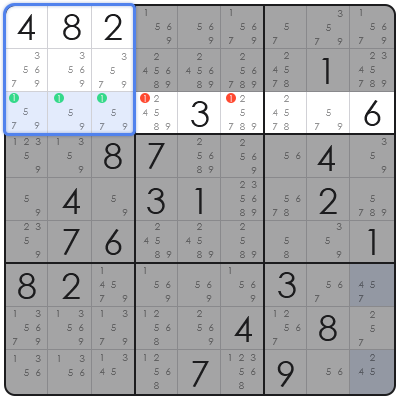
Before diving into solving puzzles, you need to understand the layout. A standard Sudoku grid is a 9×9 grid divided into nine 3×3 subgrids called “boxes.” Each row, column, and 3×3 box must contain the digits 1 through 9 without repetition.
**Step 2: Fill in the Easy Ones**
Start by looking for rows, columns, or boxes that have only one possible place for a certain number. Fill in those spots. This often requires looking at just a few cells to find the answer.
**Step 3: Use Pencil Marks**
As you fill in numbers, you might not be sure of some choices right away. Use a pencil to mark possible numbers in cells where more than one option is still possible. This helps you keep track of potential values without making mistakes.
**Step 4: Look for Patterns**
Sudoku is about recognizing patterns. Sometimes a number will only fit in one spot because it’s the only one left in the row, column, or box. Other times, you might notice that a certain number is missing from a row, column, or box, and can place it in the only remaining empty spot.
**Step 5: Eliminate Possibilities**
As you place numbers, eliminate possibilities for the same number in the same row, column, or box. This can often help you fill in numbers that were previously tricky.
**Step 6: Try Different Strategies**
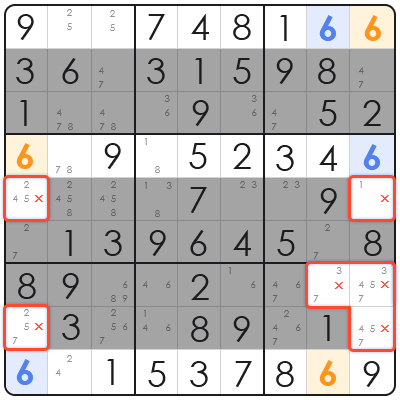
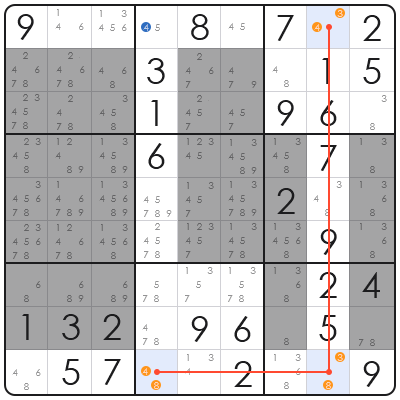
Once you’ve exhausted the obvious choices, start using more advanced strategies. This can include “X-Wing,” “Swordfish,” and “Jellyfish,” which involve identifying patterns in pairs, triples, or quads of numbers.
**Step 7: Don’t Rush**
Take your time and don’t rush. Sudoku is a puzzle game, and the goal is to enjoy the process of solving it. Haste can lead to mistakes.
**Step 8: Check Your Work Regularly**
Every now and then, double-check your work. Make sure that no number is repeated in any row, column, or box. This helps prevent errors that can be difficult to spot.
**Step 9: Don’t Get Frustrated**
If you get stuck, take a break and come back to it later. Sometimes stepping away can give you a fresh perspective.
**Step 10: Keep Practicing**
The more you practice, the better you’ll get at Sudoku. Try different puzzles of varying difficulty to challenge yourself and improve your skills.
—
### FAQ
**Q: Can I use a calculator to solve Sudoku?**
A: While it’s technically possible, using a calculator or any other aid can defeat the purpose of the game. Sudoku is meant to be solved using logical reasoning and pattern recognition, not arithmetic.
**Q: What’s the difference between standard Sudoku and other variations?**
A: Standard Sudoku has a grid of 9×9 and follows the rules of one number per row, column, and box. Variations can include different grid sizes, additional rules, or special symbols.
**Q: Is it okay to erase my pencil marks?**
A: Yes, it’s perfectly fine to erase pencil marks as you fill in the numbers. It keeps your grid clean and makes it easier to see what’s left to fill in.
**Q: How can I tell if I’ve solved the puzzle correctly?**
A: After you’ve filled in all the cells, go through the grid one more time to ensure that each row, column, and box contains the digits 1 through 9 without repetition. If they all do, you’ve solved it correctly!
**Q: Is Sudoku just for entertainment, or are there benefits to solving it?**
A: Sudoku is a fun and engaging activity, but it also has cognitive benefits. It can improve concentration, memory, and problem-solving skills. Plus, it’s a great way to relax and unwind.