

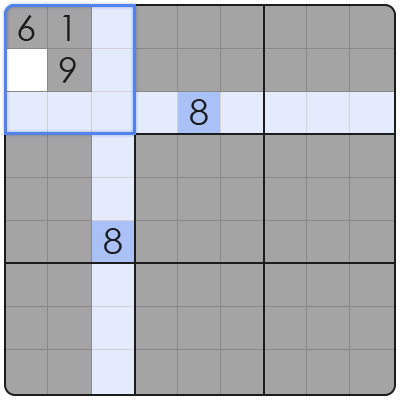

how to solve sudoku problems
## How to Solve Sudoku Problems: A Comprehensive Guide
### Understanding Sudoku
Sudoku is a logic-based, combinatorial number-placement puzzle. The objective is to fill a 9×9 grid with digits so that each column, each row, and each of the nine 3×3 subgrids that compose the grid (also called “boxes”, “blocks”, or “regions”) contain all of the digits from 1 to 9. The puzzle setter provides a partially completed grid, which for a well-posed puzzle has a single solution.
### Basic Rules
– **Each Row:** Must contain all of the digits from 1 to 9.
– **Each Column:** Must contain all of the digits from 1 to 9.
– **Each 3×3 Subgrid:** Must contain all of the digits from 1 to 9.
– **No Duplicates:** Digits cannot be repeated in the same row, column, or subgrid.
### Step-by-Step Strategy
#### Step 1: Look for Single Candidates
Start by looking for cells that have only one possible digit that can go into them. Place that digit in the cell.
#### Step 2: Use Pencil Marks
If there are cells that have more than one possibility, use pencil marks to record all potential digits. This helps to keep track of possibilities without cluttering the grid.
#### Step 3: Utilize Subgrid Patterns
Look for patterns within the 3×3 subgrids. If you see that certain digits are missing in a subgrid, it may indicate that they must appear in other rows or columns of the same subgrid.
#### Step 4: Apply the “X-Wing” and “Swordfish” Techniques
Advanced techniques such as the “X-Wing” and “Swordfish” can help solve more complex puzzles. These methods involve finding rows or columns with two candidates for a digit, which can eliminate the possibility of that digit in other rows or columns of the same subgrid.
### Advanced Techniques
– **Hidden Single:** A number can be placed in a cell because it’s the only number that can go there.
– **Pointing Pairs:** Two cells in the same row or column each have only two possible values. These two values point to only two other cells, where they can only be one of the two possible values.
– **Box Line Redundancy:** In some cases, you may be able to use the given numbers in the subgrid to eliminate possible values in other cells within the same subgrid.
### Tips for Solving Sudoku
– **Be Patient:** Sudoku can be challenging, so don’t rush.
– **Focus on One Section at a Time:** Start by filling in easy numbers, then move to more difficult ones.
– **Look for Patterns:** Patterns can often lead you to the next logical step.
### FAQ
**Q: Can I use a computer program to solve Sudoku?**
A: Yes, many people use computer programs or Sudoku apps to solve the puzzles, especially for complex puzzles.
**Q: Are there different difficulty levels of Sudoku puzzles?**
A: Yes, Sudoku puzzles come in various difficulty levels, from very easy to very hard. The difficulty can be based on the number of given clues or the complexity of the solution techniques required.
**Q: Can Sudoku help improve my problem-solving skills?**
A: Absolutely, solving Sudoku puzzles can enhance logical thinking and pattern recognition, which are skills useful in many aspects of life and work.
**Q: What’s the best way to practice Sudoku?**
A: The best way to practice Sudoku is by regularly solving puzzles. You can find puzzles in books, magazines, or online. As you become more comfortable, try different difficulty levels and different puzzle styles.


