

regles du sudoku
**Sudoku Rules: A Comprehensive Guide**
**Section 1: Basic Sudoku Rules**
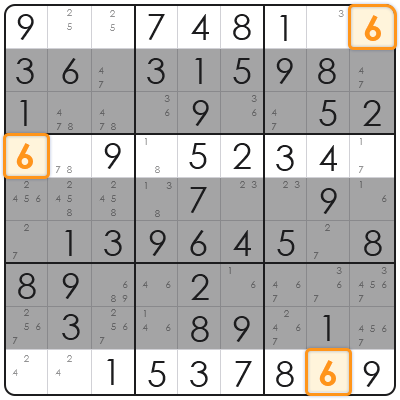
Sudoku is a popular puzzle game that challenges players to fill a 9×9 grid with numbers so that each row, each column, and each of the nine 3×3 subgrids that compose the grid (also called “boxes”, “blocks”, or “regions”) contain all of the digits from 1 to 9. Here are the fundamental rules:
1. **Grid Structure**: A standard Sudoku grid has 81 cells divided into 9 rows and 9 columns. These cells are further divided into nine 3×3 subgrids.
2. **Numbers and Placement**: The objective is to place numbers from 1 to 9 in each row, column, and 3×3 subgrid. Each number can appear only once in each row, column, and subgrid.
3. **Starting Grid**: The grid is typically given with some cells pre-filled with numbers. The challenge is to determine the correct numbers for the remaining empty cells.
4. **Logical Deduction**: There is no guessing in Sudoku. Players must use logical deduction to find the correct numbers.
**Section 2: Advanced Sudoku Strategies**
While the basic rules are straightforward, mastering Sudoku requires an understanding of various strategies. Here are some common techniques:
1. **Single Candidate**: If only one number can fit in a particular cell, that number is the correct answer.
2. **Single Elimination**: If a number can only go in one cell in a row, column, or subgrid, eliminate that number from all other cells in that row, column, or subgrid.
3. **Pencil Marking**: Use pencil marks to keep track of possible numbers in each cell. This helps in visualizing the possibilities and identifying patterns.
4. **X-Wing and Swordfish**: These are advanced strategies that involve identifying patterns across multiple rows, columns, or subgrids.
**Section 3: Sudoku FAQs**
**Q1: How do I start a Sudoku puzzle?**
A1: Begin by looking for rows, columns, or subgrids where only one number can be placed. Use logical deduction to fill in the numbers accordingly.
**Q2: Can I use a calculator to solve Sudoku?**
A2: While a calculator can help with simple arithmetic, Sudoku relies on logical deduction rather than mathematical calculations. Using a calculator might give you the answers but won’t improve your Sudoku-solving skills.
**Q3: Are there different types of Sudoku puzzles?**
A3: Yes, there are various types of Sudoku puzzles, including standard, jigsaw, Killer Sudoku, and more. Each type has its unique rules and challenges.
**Q4: Can I solve Sudoku without using pencil marking?**
A4: While it is possible to solve Sudoku without pencil marking, many players find it helpful to keep track of possible numbers. Pencil marking aids in visualizing patterns and simplifies the process.
**Q5: Is there a minimum age to play Sudoku?**
A5: Sudoku can be enjoyed by players of all ages. There is no minimum age requirement, but the level of difficulty may vary based on the player’s experience and skill level.
**Section 4: Conclusion**
Sudoku is a fun and engaging puzzle game that can be enjoyed by players of all ages and skill levels. By understanding the basic rules and employing various strategies, you can improve your Sudoku-solving skills and enjoy hours of entertainment. Happy solving!