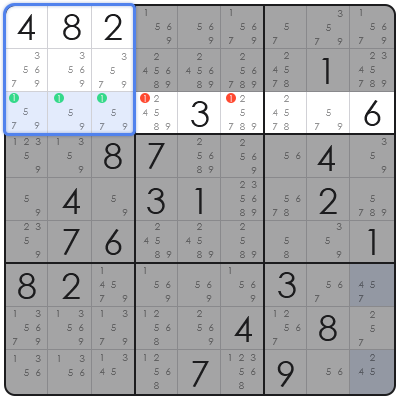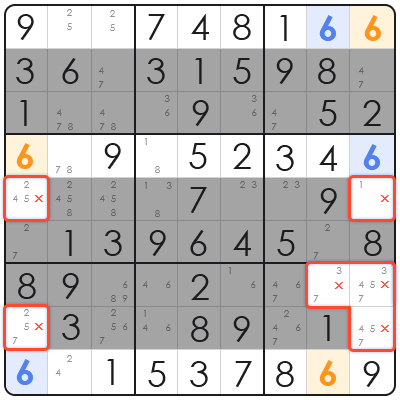
sudoku basic
Master the Basics of Sudoku: A Comprehensive Guide to the Popular Puzzling Game
Sudoku is a captivating logic-based puzzle game that has gained immense popularity worldwide. It involves filling a 9×9 grid with numbers such that each row, column, and 3×3 sub-grid contains all the digits from 1 to 9 without repetition. Whether you are a beginner or looking to improve your skills, this article will provide you with a comprehensive guide to the basic rules and strategies of Sudoku.
Basic Rules of Sudoku:
- Grid Structure: A Sudoku grid consists of 9 rows and 9 columns, forming a 9×9 square. Each row and column is further divided into 3×3 sub-grids, also known as boxes or blocks.
- Numbers: The numbers 1 to 9 must appear exactly once in each row, column, and sub-grid.
- Starting Grid: A Sudoku puzzle begins with some numbers already filled in, known as givens. These givens provide a starting point for solving the puzzle.
How to Play Sudoku:
- Analyze the Givens: Start by examining the givens in the grid. Look for numbers that appear only once in a row, column, or sub-grid. These numbers can be filled in immediately.
- Use Process of Elimination: For numbers that appear more than once in a row, column, or sub-grid, eliminate the possibilities one by one. If only one number can fit in a particular cell, fill it in.
- Look for Patterns: Sudoku puzzles often have hidden patterns or sequences that can help you solve the puzzle. For example, if you notice a pattern of numbers 12345 in a row, column, or sub-grid, you can fill in the missing number 6.
- Backtracking: If you reach a point where you can’t make any progress, backtrack to previous steps and try different possibilities until you find the correct solution.
Advanced Strategies:
- X-Wing and Swordfish: These techniques involve identifying patterns that allow you to eliminate multiple possibilities in a row, column, or sub-grid.
- XY-Wing: This technique involves identifying a cycle of three numbers that can be used to eliminate possibilities in a row, column, or sub-grid.
- Unique Rectangle: This technique helps you identify a rectangle with two pairs of numbers that can be used to eliminate possibilities in a row, column, or sub-grid.
Sudoku is a fun and challenging puzzle game that can be enjoyed by players of all ages. By understanding the basic rules and strategies, you can start solving Sudoku puzzles with ease. As you progress, explore advanced techniques to enhance your skills and enjoy the endless possibilities of this popular puzzle game. Happy Sudoku-solving!
Mastering Sudoku: A Basic Guide to Play and Solve Sudoku Puzzles
Sudoku is a popular puzzle game that requires logic and reasoning skills. It has gained immense popularity worldwide, attracting both puzzle enthusiasts and casual gamers. Whether you are a beginner or looking to improve your skills, this article will provide you with a basic guide to playing and solving Sudoku puzzles.
Understanding Sudoku:
Sudoku is a grid-based puzzle that consists of 9×9 cells divided into nine 3×3 subgrids. The objective is to fill the grid with numbers from 1 to 9 in such a way that each row, column, and subgrid contains all the digits from 1 to 9 without repetition.
Basic Rules:
- Each row, column, and 3×3 subgrid must contain all digits from 1 to 9.
- No two identical numbers can be placed in the same row, column, or subgrid.
- The starting grid provides some pre-filled numbers to guide you through the puzzle.
How to Play Sudoku:
- Start by observing the given numbers in the grid.
- Look for rows, columns, or subgrids that have missing numbers.
- Use logical reasoning to determine the possible numbers for the missing cells.
- Eliminate numbers that are already present in the row, column, or subgrid.
- Place the correct number in the empty cell.
- Repeat the process until all cells are filled.
Tips for Solving Sudoku:
- Start with the 3×3 subgrids: Filling a subgrid is often easier than filling a row or column.
- Look for patterns: Identify rows, columns, or subgrids with missing numbers or repeated digits.
- Use the process of elimination: Eliminate numbers that are already present in the row, column, or subgrid.
- Be patient: Sudoku puzzles can be challenging, so take your time and don’t rush.
- Practice regularly: The more you play, the better you will become at solving Sudoku puzzles.
Sudoku is a fun and engaging puzzle game that requires logical thinking and patience. By following the basic rules and tips provided in this guide, you can improve your skills and enjoy solving Sudoku puzzles. Remember, practice makes perfect, so keep challenging yourself with different levels of Sudoku puzzles to become a master solver!
Sudoku: A Comprehensive Guide to the Basic Rules and How to Play
Sudoku, a popular puzzle game, has captured the interest of millions worldwide. Known for its simplicity yet challenging nature, Sudoku is a great way to keep your mind sharp and entertained. In this article, we will delve into the basic rules of Sudoku and provide a step-by-step guide on how to play.
Basic Rules of Sudoku:
- A Sudoku grid is a 9×9 grid, divided into nine 3×3 subgrids called "boxes."
- The objective is to fill the grid with digits so that each column, each row, and each of the nine 3×3 subgrids that compose the grid (also called "boxes", "blocks", or "regions") contain all of the digits from 1 to 9.
- The puzzle setter provides a partially completed grid, which for a well-posed puzzle has a single solution.
- No row, column, or box can contain the same number twice.
How to Play Sudoku:
Step 1: Start by examining the grid. Look for any numbers that are already placed, as they can serve as clues to solve the puzzle.
Step 2: Find a number that can be placed in a row, column, or box without violating the Sudoku rules. For example, if you notice that the number 1 is missing in a row, try placing it in any empty cell within that row.
Step 3: As you place numbers, ensure that no two identical numbers are present in any row, column, or box. If you find yourself in a situation where no number can be placed without violating the rules, go back to a previous step and reconsider your previous choices.
Step 4: Continue the process of placing numbers and solving the puzzle until you have filled the entire grid. Remember to use logic and deduction, as guessing can lead to incorrect answers.
Tips for Solving Sudoku:
- Begin with the boxes: Since each box must contain all the digits from 1 to 9, filling them first can provide valuable insights.
- Look for "penciled in" numbers: Sometimes, you might notice a number that can be placed in a particular row, column, or box without any conflict. Take advantage of these opportunities.
- Eliminate possibilities: If a number cannot be placed in any row, column, or box without causing a conflict, eliminate it as a possibility for other cells.
- Be patient: Sudoku puzzles can be challenging, and it might take some time to solve them. Stay patient and keep working on the puzzle.
Sudoku is a fun and engaging puzzle game that can help improve your logical thinking and problem-solving skills. By understanding the basic rules and following the step-by-step guide, you’ll be well on your way to becoming an expert Sudoku solver. Happy solving!
Sudoku Basic: A Comprehensive Guide to the Classic Puzzle Game
Sudoku, a popular puzzle game that has captivated players worldwide, is a fantastic way to challenge your brain and improve your logical thinking skills. Whether you’re a seasoned puzzle solver or a beginner looking to dive into the world of Sudoku, this guide will provide you with the basic rules and strategies to get you started.
What is Sudoku?
Sudoku is a logic-based, combinatorial number-placement puzzle. The objective is to fill a 9×9 grid with digits so that each column, each row, and each of the nine 3×3 subgrids that compose the grid (also called "boxes", "blocks", or "regions") contain all of the digits from 1 to 9. The puzzle setter provides a partially completed grid, which for a well-posed puzzle has a single solution.
Basic Rules
- Grid Layout: The Sudoku grid is divided into nine 3×3 subgrids, each containing nine cells.
- Numbers 1-9: The numbers 1 through 9 must appear exactly once in each row, column, and 3×3 subgrid.
- No Repeats: No number can be repeated in any row, column, or 3×3 subgrid.
How to Play Sudoku
- Start with a Pencil: Use a pencil to mark potential numbers in each cell until you are confident in your choice.
- Look for Patterns: Identify rows, columns, or subgrids where certain numbers are already placed. This will help you eliminate possibilities for other cells.
- Cross-Hatching: Draw lines between cells where a number cannot go, based on the numbers already in the row, column, and subgrid.
- Trial and Error: If you’re stuck, try different numbers in a cell and see if it leads to a contradiction. If not, it might be the correct number.
Strategies for Solving Sudoku
- Single Candidate: If a cell has only one possible number, fill it in.
- Single Elimination: If a number can only go in one cell in a row, column, or subgrid, place it there.
- X-Wing and Swordfish: These are advanced strategies that involve patterns in rows or columns that can help eliminate numbers in other rows or columns.
- Hidden Pairs and Triples: Look for pairs or triples of numbers that can only go in two or three cells in a row, column, or subgrid.
Tips for Beginners
- Take Your Time: Don’t rush. Sudoku is a puzzle game, and it’s meant to be enjoyed.
- Use pencil marks: It’s easier to erase a wrong number than to cross it out.
- Practice Makes Perfect: The more you play, the better you’ll get at recognizing patterns and solving puzzles.
Sudoku is not just a fun way to pass time; it’s a mental workout that can help improve your concentration, memory, and problem-solving skills. With these basic rules and strategies, you’re well on your way to becoming a Sudoku master!
Sudoku Basic: A Comprehensive Guide to the Classic Puzzling Game
Sudoku, often hailed as the world’s favorite puzzle game, is a captivating blend of logic, strategy, and problem-solving skills. The basic version of Sudoku, also known as "Standard Sudoku," is simple to learn yet challenging to master. Here’s a detailed guide to help you get started with Sudoku basic rules and strategies.
What is Sudoku?
Sudoku is a number-placement puzzle that was developed in 1979 by Howard Garns, an American architect. The word "Sudoku" is a combination of the Japanese words "su" (number) and "doku" (single). The goal of the game is to fill a 9×9 grid with digits so that each column, each row, and each of the nine 3×3 subgrids that compose the grid (also called "boxes", "blocks", or "regions") contain all of the digits from 1 to 9.
Basic Rules of Sudoku
- The Grid: A Sudoku grid is divided into 9 rows and 9 columns, totaling 81 squares.
- 9×9 Boxes: The grid is further divided into nine 3×3 boxes.
- Numbers 1-9: Each box, row, and column must contain all of the digits from 1 to 9, without repetition.
- No guessing: Unlike other puzzle games, Sudoku does not involve guessing. All numbers must be placed based on the rules.
How to Play Sudoku
- Start with an Easy Puzzle: If you’re new to Sudoku, begin with an easy puzzle. You can find many online Sudoku generators that offer puzzles of varying difficulty levels.
- Look for Missing Numbers: Begin by filling in any squares that have only one possible number. This is known as an "obvious" number or "unique rectangle."
- Cross-Hatching: Draw lines (or cross-hatch) through numbers that are not in the current row, column, or box. This helps you remember which numbers are already used and which are not.
- Elimination Method: Look for rows, columns, or boxes where only two numbers are missing. Eliminate these numbers from other squares in the same row, column, or box.
- Trial and Error: If all else fails, try different numbers in empty squares until you find the one that works. This is where the logical reasoning and strategy come into play.
Tips for Solving Sudoku
- Patience is Key: Sudoku is a puzzle game that requires patience and persistence.
- Practice Regularly: Like any skill, Sudoku requires practice to improve.
- Don’t Give Up: If you get stuck, take a break and come back to the puzzle with a fresh perspective.
Sudoku is not just a fun pastime; it also improves cognitive abilities, including concentration, logical reasoning, and spatial recognition. By following these basic rules and strategies, you’ll be well on your way to becoming a Sudoku master!