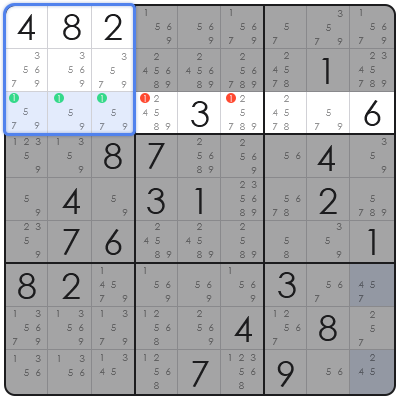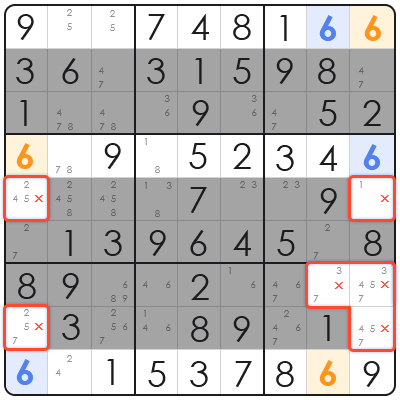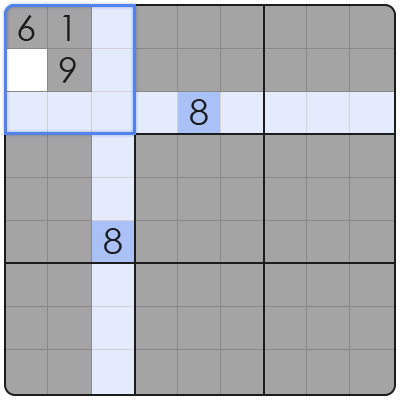


sudoku game in c with coding
## Sudoku Game in C++ with Coding: A Comprehensive Guide
### Introduction to Sudoku
Sudoku is a popular puzzle game that involves filling a 9×9 grid with digits so that each column, each row, and each of the nine 3×3 subgrids that compose the grid contain all of the digits from 1 to 9. C++, being a versatile and powerful programming language, is an excellent choice for implementing a Sudoku game. This article provides a step-by-step guide to creating a Sudoku game in C++.
### Getting Started
#### 1. Environment Setup
Before diving into the coding, ensure you have a C++ compiler installed on your system. Popular compilers include GCC, Clang, and MSVC.
#### 2. Game Design
Decide on the complexity of your Sudoku game. Will it support different difficulty levels? Will it include features like hints or a timer?
#### 3. Game Structure
Outline the basic structure of your game, including the game board, the solving algorithm, user input, and the game loop.
### Coding the Sudoku Game
#### 4. Game Board Initialization
“`cpp
const int BOARD_SIZE = 9;
int board[BOARD_SIZE][BOARD_SIZE];
void initializeBoard() {
for (int i = 0; i < BOARD_SIZE; i++) {
for (int j = 0; j < BOARD_SIZE; j++) {
board[i][j] = 0;
}
}
}
```
#### 5. User Interface
```cpp
void displayBoard() {
for (int i = 0; i < BOARD_SIZE; i++) {
for (int j = 0; j < BOARD_SIZE; j++) {
cout << board[i][j] << " ";
}
cout << endl;
}
}
```
#### 6. User Input
```cpp
void getUserInput() {
int row, col, num;
cout << "Enter row, column, and number (0 if empty): ";
cin >> row >> col >> num;
if (row >= 0 && row < BOARD_SIZE && col >= 0 && col < BOARD_SIZE) {
board[row][col] = num;
}
}
```
#### 7. Sudoku Solver Algorithm
Implementing a solver can be complex. A common approach is to use backtracking. Here's a simplified version:
```cpp
bool isSafe(int row, int col, int num) {
for (int i = 0; i < BOARD_SIZE; i++) {
if (board[row][i] == num || board[i][col] == num) return false;
int boxRow = row - row % 3;
int boxCol = col - col % 3;
for (int i = boxRow; i < boxRow + 3; i++) {
for (int j = boxCol; j < boxCol + 3; j++) {
if (board[i][j] == num) return false;
}
}
}
return true;
}
bool solveSudoku() {
for (int i = 0; i < BOARD_SIZE; i++) {
for (int j = 0; j < BOARD_SIZE; j++) {
if (board[i][j] == 0) {
for (int num = 1; num <= BOARD_SIZE; num++) {
if (isSafe(i, j, num)) {
board[i][j] = num;
if (solveSudoku()) return true;
board[i][j] = 0;
}
}
return false;
}
}
}
return true;
}
```
### Frequently Asked Questions (FAQ)
#### Q: What is Sudoku?
A: Sudoku is a logic-based combinatorial number-placement puzzle. The objective is to fill a 9x9 grid with digits so that each column, each row, and each of the nine 3x3 subgrids that compose the grid contain all of the digits from 1 to 9.
#### Q: Can I make my own Sudoku puzzles?
A: Yes, you can generate Sudoku puzzles using various algorithms, such as backtracking, constraint satisfaction, or genetic algorithms.
#### Q: How do I debug my Sudoku solver?
A: To debug your Sudoku solver, start by checking the constraints. Ensure that no duplicate numbers exist in any row, column, or 3x3 subgrid. Once the constraints are correct, you can add print statements to see the board state at each step of the recursion.
#### Q: Can I make the game more interactive?
A: Absolutely! You can add features like a timer, hints, undo/redo functionality, or even a feature to check if the user's solution is correct.
#### Q: What is backtracking?
A: Backtracking is a recursive algorithm for solving constraint satisfaction problems by incrementally building candidates to the solutions, and abandons a candidate ("backtracks") as soon as it determines that the candidate cannot possibly be completed to a valid solution.
#### Q: Can I use a library for Sudoku?
A: While using a library can simplify the process, it's recommended to implement the algorithm yourself for educational purposes. This helps in understanding the underlying logic and enhancing your programming skills.
#### Q: Is Sudoku suitable for C++?
A: Yes, Sudoku is an excellent candidate for C++ due to its ability to handle complex data structures and algorithms efficiently.
By following this guide, you should be able to create a functional Sudoku game in C++. Happy coding!